Hydro Jetting vs. Snaking: Which Drain Cleaning Method Wins?
Snaking punches a hole through a clog. Hydro jetting scours the entire pipe wall clean. After 18 years and 4,200+ drain calls, here's when each method is the right call — and the camera inspection that should always come before either tool goes into your drain.
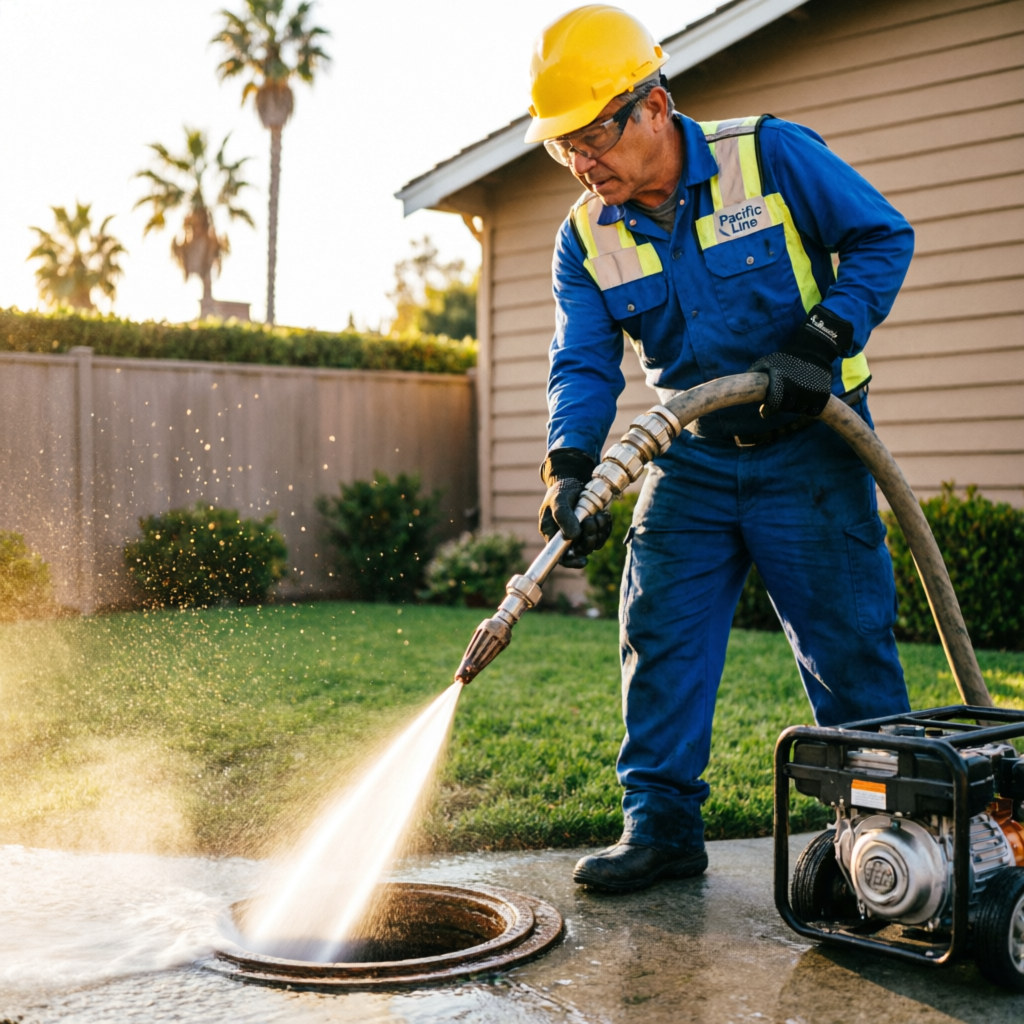
Every week I get calls from homeowners who've been quoted two completely different prices for "drain cleaning" by two different plumbers. Plumbers claim their method is the right one. The homeowner is stuck in the middle, unsure which tool the job actually needs.
Here's the honest answer: both snaking and hydro jetting are legitimate, professional-grade drain cleaning methods. Neither is "better" in the abstract — each wins in specific scenarios. The right tool depends on what is clogging the line, where the clog is, how old the pipe is, and what condition the pipe is in. And there's one prerequisite step that should always happen before either tool touches your pipe — which most homeowners never ask about.
After 18 years running sewer and jetting crews across Los Angeles and San Diego, I've cleared more drains than I can count with both methods. This guide is the exact framework I use on every service call to decide which tool to pull off the truck.
What snaking actually does
A drain snake (also called an auger) is a long, flexible steel cable with a cutting head on the end. A motor rotates the cable as it's fed into the drain, and the cutting head bores through whatever is blocking flow — roots, grease, hair, foreign objects, mineral scale.
There are two categories of snake:
Small-diameter hand augers and drum machines (¼"–⅜" cable)
Used for fixture drains — kitchen sinks, bathroom sinks, showers, tubs. These machines reach 25–50 feet and are effective against hair clogs, soap buildup, and small foreign objects. They typically clear through the P-trap and the first few feet of branch line.
Main-line sewer machines (½"–¾" cable)
Used for the main sewer lateral from your home to the city main. These machines reach 100–200 feet and carry cutting heads designed to slice through root masses, grease plugs, and heavy mineral scale. The most common is the sectional cable machine (like a RIDGID K-1500) or the drum-style RIDGID K-60.
What snaking actually accomplishes
Snaking punches a hole through the clog — it restores flow by carving a pathway through the obstruction. The cutting head clears roughly its own diameter through the blockage. So a ¾" cable with a 3" cutting head restores a 3" pathway through the clog — but the surrounding pipe wall retains whatever buildup was already there.
Think of it like drilling a tunnel through a mountain. You've restored passage, but the mountain is still there on either side. For a simple root mass at a single joint or a localized grease plug, that's often all you need. For a line with years of accumulated buildup along its entire length, snaking is a temporary fix.
What hydro jetting actually does
A hydro jetting machine is a high-pressure pump (typically 3,000–4,000 PSI at 4–18 gallons per minute) that drives water through a specialized nozzle on the end of a reinforced hose. The nozzle has jets pointing backward (to pull the hose through the pipe) and jets pointing sideways and forward (to scour the pipe wall).
There are three categories of nozzle, each designed for a different type of blockage:
Grease nozzles
Multiple forward-facing jets at low angles, designed to melt and flush grease buildup. Used in kitchen lines, restaurant laterals, and any pipe where fats, oils, and grease (FOG) have accumulated.
Root-cutting nozzles
Forward-facing "warthog" style nozzles with concentrated jets that cut through root masses, combined with radial jets that scour the pipe wall. Used on main sewer laterals with root intrusion at joints.
Descaling nozzles
Specialized nozzles with tungsten-carbide tips or chain flails that break up mineral scale on the pipe wall. Used in hard-water areas and on cast iron pipe with decades of calcification.
What hydro jetting actually accomplishes
Hydro jetting scours the entire pipe wall — not just the obstruction. At 4,000 PSI, the water jets strip away root masses, grease layers, mineral scale, and biofilm down to the bare pipe material. The result is a pipe restored to near-original diameter, not just a tunnel through the clog.
Think of it like power-washing a driveway versus scraping a single path through the moss. Hydro jetting is a comprehensive cleaning, not a localized fix. For lines with diffuse buildup, repeated clogs, or years of accumulated scale, jetting is almost always the better choice.
Side-by-side: snaking vs. hydro jetting
| Factor | Snaking | Hydro jetting |
|---|---|---|
| What it does | Punches hole through clog | Scours entire pipe wall |
| Time on site | 1–2 hours | 2–4 hours |
| Effective against roots | Yes, at single joints | Yes, across entire line |
| Effective against grease | Poor (pushes it around) | Excellent |
| Effective against scale | Poor | Excellent |
| Foreign objects (toys, wipes) | Good (can hook and pull) | Poor (pushes them further) |
| Safe on old pipe | Generally safer | Risk if pipe is already damaged |
| Requires camera inspection first | Recommended | Required |
| Mess / water use | Minimal | Higher (60–120 gal per job) |
When snaking wins
Snaking is the right tool for roughly 40% of residential drain calls. Here's when it's the smart choice:
1. Localized, single-point clogs
A kitchen sink that won't drain, a shower backing up with hair, a toilet that won't flush — these are almost always single-point clogs in the P-trap or the first few feet of branch line. A small drum auger clears them in 30–60 minutes. Hydro jetting would be overkill and wasteful.
2. First-time main line backups
If your main sewer line has backed up for the first time and there's no history of chronic issues, snaking is usually the right first move. It clears the immediate blockage, buys you time, and costs 40–60% less than jetting. If the clog returns within 12 months, you upgrade to jetting or a camera inspection.
3. Foreign objects
Toys dropped in toilets, jewelry down sink drains, flushable wipes accumulated in main lines — snaking with a retrieval head can hook and pull these objects back out. Hydro jetting will push them further down the line, sometimes into the city main where retrieval becomes impossible.
4. Old, fragile pipe
Original cast iron, Orangeburg (bituminous fiber), or corroded clay tile pipe that's near end-of-life can be damaged by 4,000 PSI water. On these lines, a gentler snake pass is the safer option until a more permanent repair (CIPP lining or pipe bursting) can be scheduled.
5. Budget-constrained situations
When the homeowner can't afford jetting right now but needs flow restored today, snaking buys time. I'd rather snake a line and come back in 12 months for a jetting than let a homeowner live with a backup. A planned jetting in 6 months is better than an emergency excavation tomorrow.
When hydro jetting wins
Hydro jetting is the right tool for the other 60% of calls — particularly the ones where snaking has already been tried and failed. Here's when jetting is the clear winner:
1. Recurring main line backups
If you've snaked the same line twice in the past 18 months and the clog keeps returning, the problem isn't a single obstruction — it's diffuse buildup along the pipe wall. Every snake pass punches a new hole through the same grease, roots, and scale. Jetting removes the buildup entirely and buys 2–5 years before regrowth.
2. Heavy grease accumulation
Restaurant laterals, home kitchens where bacon grease goes down the drain, and multi-unit buildings with shared grease lines accumulate FOG (fats, oils, grease) as a thick layer on the pipe wall. Snaking punches through but leaves 80% of the grease behind. Jetting strips it to bare pipe. This is the single biggest win for jetting over snaking.
3. Root intrusion at multiple joints
Single-point root intrusion at one joint is snake territory. But when roots have penetrated 5, 10, or 15 joints along a 60-foot lateral — common in Pasadena, North Park, and any neighborhood with mature street trees — jetting with a root-cutting nozzle clears the entire run in one pass.
4. Hard water scale in older cast iron
San Diego's 280–340 ppm hard water deposits calcium carbonate scale on the inside of cast iron drain lines over decades. This scale progressively narrows the pipe until flow is severely restricted. Snaking barely affects scale. Jetting with a descaling nozzle breaks it up and flushes it out.
5. Pre-lining preparation
CIPP trenchless lining (the "pipe-within-a-pipe" repair) requires a perfectly clean host pipe. Any residual grease, scale, or roots will prevent the liner from bonding. Every CIPP install we do starts with a full hydro jetting pass to prepare the surface. This is non-negotiable.
6. Pre-purchase sewer inspections
When a home buyer orders a sewer camera inspection during escrow and the camera shows heavy buildup but intact pipe structure, a jetting pass can save the deal. We clear the line, re-run the camera, and document that the pipe is structurally sound — just needed cleaning. Without jetting, the buyer might demand replacement credit.
The prerequisite step: camera inspection before anything
This is the step that separates a professional drain service from a "guy with a snake." Before any tool goes into your main sewer line, a camera should go in first. Here's why:
A camera tells us what we're dealing with
Is the blockage roots? Grease? A broken pipe? A belly where the line has sagged? A collapsed section? Without a camera, we're guessing. With a camera, we know — and we can match the tool to the problem.
A camera protects your pipe
Hydro jetting a pipe with an existing break or severe offset can force water into the surrounding soil, washing out the bedding and making the problem worse. A camera inspection before jetting is mandatory — not optional. We've been called to repair damage done by "discount" jetting companies that skipped the camera and blasted water into a broken pipe.
A camera documents the before
After the cleaning, we run the camera again to verify the result. The before-and-after video is part of your service record If the clog returns within 90 days for the same reason, we come back and clear it at no charge.
Every main line drain cleaning at Pacific Line includes a full camera inspection — before and after. You get a copy of the video, a written report, and a diagram showing the exact location of every defect. There's no extra charge for the camera work; it's part of the service. If a plumber quotes you for drain cleaning without including a camera inspection, ask for one. If they won't do it, call someone else.
Our full 5 signs your sewer line needs repair guide breaks down what a camera inspection reveals and what each finding means for repair decisions.
Risks and when not to hydro jet
Hydro jetting is an extremely effective tool, but it's not always safe. The 4,000 PSI water stream can cut through flesh (this is why our technicians wear full protective gear) — and it can also damage pipes that aren't structurally sound.
When we will NOT hydro jet
- Broken or collapsed pipe. If the camera shows a break, offset, or collapse, jetting will force water into the surrounding soil and accelerate the failure. These lines need repair (CIPP lining or pipe bursting) before any cleaning.
- Severe belly in the line. A sagged section holds standing water permanently. Jetting can't fix the sag, and the clog will reform within weeks. This requires excavation and re-grading of the pipe.
- Orangeburg pipe (bituminous fiber). This 1940s–60s material is essentially compressed tar paper. It disintegrates under jetting pressure. If your home has Orangeburg, replacement is the only reliable option.
- Corroded cast iron with thin walls. Cast iron drain lines lose wall thickness over decades. If the camera shows pinhole leaks or severely thinned walls, jetting can blow through. These lines should be lined (CIPP) or replaced.
- Old clay tile with loose mortar joints. Jetting can wash out the mortar holding the joints together. These lines need CIPP lining to create a jointless pipe-within-a-pipe.
This is exactly why the camera inspection is non-negotiable. A 5-minute camera pass tells us whether jetting is safe — and saves you from excavation that a "jet-first" plumber might cause.
The myth: "jetting is bad for old pipes"
I hear this from homeowners all the time, usually after a well-meanning neighbor told them jetting would "blow up their pipes." The truth is more nuanced: jetting is bad for damaged pipes, but perfectly safe for structurally sound old pipes. A 70-year-old clay tile line with intact walls and minor root intrusion is an ideal jetting candidate. A 20-year-old PVC line with a broken joint is not.
The pipe's condition matters, not its age. That's why the camera comes first, every time.
Frequently asked questions
The right answer depends on what's in the pipe — which is why a camera inspection should always come first. As a general rule: snaking is right for localized clogs, first-time backups, and old fragile pipe. Hydro jetting is right for recurring main line backups, heavy grease or root buildup, hard water scale, and pre-lining preparation. If you've snaked the same line twice in 18 months and the clog keeps returning, jetting is almost certainly the better next step.
Hydro jetting is safe for structurally sound pipes — including old clay tile, cast iron, PVC, and ABS. It is not safe for broken, collapsed, severely corroded, or Orangeburg pipes, where the 4,000 PSI water can damage the surrounding soil or blow through weakened walls. This is why a camera inspection is mandatory before any jetting service — it verifies the pipe's structural integrity before high-pressure water is introduced.
For most residential main lines, a proper hydro jetting provides 2–5 years of clear flow. The range depends on the cause of the buildup: grease and scale buildup typically stays clear 3–5 years after jetting. Root intrusion at joints returns more quickly — typically 18–36 months — because the roots continue to grow from the outside. We pair jetting with foaming root treatment (Root-X) on root-prone lines, which extends the interval significantly.
It can — if the line is already damaged or structurally unsound. This is exactly why we never hydro jet without first running a camera inspection. The camera reveals existing breaks, offsets, collapses, Orangeburg pipe, and severely corroded cast iron — any of which would make jetting unsafe. Any plumber who offers to jet your line without first showing you the interior on camera is taking a risk with your property. We won't do it, and we recommend you don't let anyone else do it either.
A typical residential main line jetting uses 60–120 gallons of water over a 2–3 hour service call. That's roughly equivalent to one long shower plus a load of laundry — a trivial amount relative to the result. We use our truck's onboard water tank for the job; we don't hook up to your home's supply. All wastewater flows out the sewer cleanout and into the city main, where it belongs.
For a simple sink clog or toilet backup, a hand auger from the hardware store is often effective. For a main sewer line backup, DIY snaking with a rented machine is not something we recommend. Main line machines are heavy, dangerous (the rotating cable can break bones), and require skill to navigate bends and avoid damaging the pipe. Most importantly, you're working blind — without a camera, you don't know what you're pushing through or whether you're making a structural problem worse.
Let's figure out which method your drain actually needs.
Book a drain service call with a licensed specialist. Every main line service includes a camera inspection before and after — so you see exactly what's in the pipe and verify it's clean when we leave.
Ricardo Garcia
Sewer and Jetting Specialist at Pacific Line with 18 years of field experience. Ricardo leads our jetting and trenchless sewer division, has cleared over 4,200 main line blockages, and is factory-certified on US Jetting and Spartan jetting equipment. He lives in East LA with a 70-year-old clay tile sewer lateral that he jetted and lined in 2019 — and has only done camera inspections on since.
Keep reading
5 Signs Your Sewer Line Needs Repair (Before It's Too Late)
Multiple drain backups. Gurgling toilets. Lawn sinkholes. Catch a failing main line before it becomes an excavation emergency.
How to Prevent Drain Clogs in California Homes
Six daily habits that keep drains clear in hard water, the three products we actually recommend, and the one thing never to pour down a drain.
The True Cost of Plumbing Services in Los Angeles (2026)
We publish our exact pricing. Service-by-service breakdown with LA-specific factors that affect your final bill.