San Diego Hard Water: What Every Homeowner Needs to Know in 2026
At 280–340 ppm, San Diego has some of the hardest tap water in California — nearly double Los Angeles levels. Our SD lead tech explains how that mineral load is destroying your tankless water heater, spotting your glassware, and causing copper pinhole leaks.
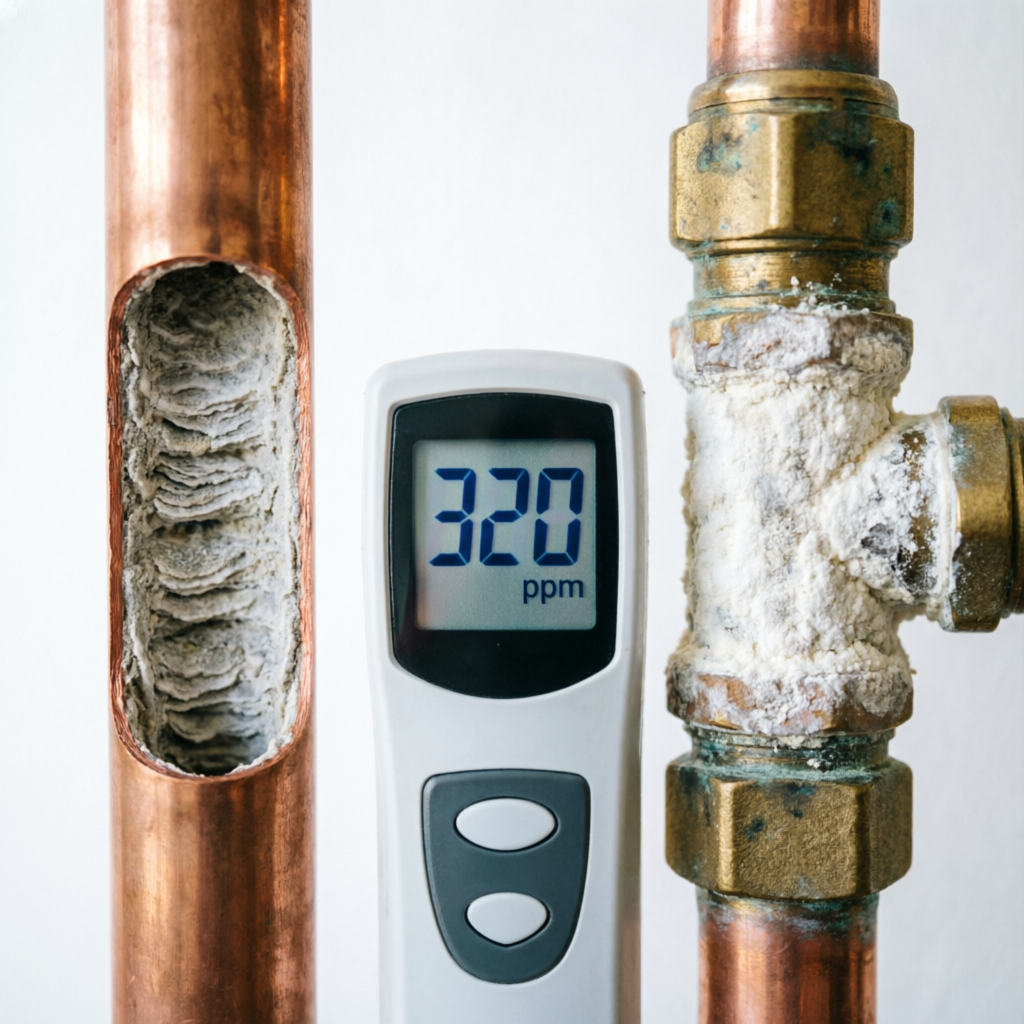
If you've ever pulled a glass from the dishwasher and found it covered in white spots, watched your shower door cloud over within weeks of cleaning, or noticed your skin feels tight after a shower — you're living with San Diego hard water.
San Diego County Water Authority delivers some of the hardest municipal water in California, consistently testing between 280 and 340 parts per million (ppm) of dissolved minerals. That's nearly double Los Angeles (120–160 ppm), triple the national median, and squarely in the "very hard" category on every water quality scale that exists.
After 14 years servicing plumbing across San Diego County — from La Jolla to Carlsbad, Coronado to Chula Vista — I've seen exactly what that mineral load does to pipes, appliances, and water heaters. This guide breaks down the science, the damage, and the solutions that actually work for SD water.
What makes San Diego water so hard?
Water hardness is measured in parts per million (ppm) of calcium carbonate and magnesium. Here's how San Diego compares:
| Water source | Hardness (ppm) | Category |
|---|---|---|
| Seattle, WA | 20–40 | Soft |
| Portland, OR | 40–80 | Moderately hard |
| Los Angeles, CA | 120–160 | Hard |
| Phoenix, AZ | 200–280 | Very hard |
| San Diego, CA | 280–340 | Very hard |
San Diego's water comes primarily from the Colorado River (via the Colorado River Aqueduct) and the Sacramento-San Joaquin Delta (via the State Water Project), with local reservoirs and desalination (the Carlsbad plant) making up the balance. Colorado River water picks up dissolved calcium and magnesium as it flows through limestone and gypsum formations in Arizona and Nevada — and by the time it reaches SD County, it's carrying a significant mineral payload.
The Carlsbad desalination plant produces very soft water (~50 ppm), but it supplies only about 10% of the county's demand. The blend still runs very hard.
The five ways hard water damages SD plumbing
1. Copper pinhole leaks (the SD epidemic)
This is the most destructive and most SD-specific impact. High-mineral water combined with chloramine disinfection creates a perfect storm for pitting corrosion in copper pipes. The minerals deposit as scale, creating localized galvanic cells under the scale layer that eat through the copper from the inside out. The result: tiny pinhole leaks that spray behind walls, under slabs, and in ceilings — often for weeks before anyone notices.
We repair pinhole leaks in SD at roughly 2× the rate we do in LA. Homes in La Jolla, Coronado, and Point Loma — where coastal salt air adds external corrosion to the internal attack — are the worst affected. Once a home has had 2–3 pinhole leaks, we almost always recommend a full PEX-A repipe rather than chasing leaks.
2. Tankless water heater failure
Navien, Rinnai, and Noritz tankless units dominate SD homes — but they're engineered for water under 150 ppm. Run 320 ppm water through a tankless heat exchanger and calcium scale coats the internal passages within 12–18 months. The unit loses efficiency, throws error codes (usually 02 or 16 on Navien), and eventually the heat exchanger cracks.
3. Tank water heater sediment buildup
Traditional tank heaters in SD accumulate roughly 1–2 inches of calcium sediment per year at the bottom of the tank. That sediment insulates the water from the burner, forcing the tank to run hotter and longer. Efficiency drops 20–30% within 5 years without flushing, and tanks that would last 10–12 years in soft water fail in 6–9 years in SD.
4. Fixture and appliance degradation
Faucet aerators clog every 3–6 months. Showerheads lose half their spray jets. Dishwashers and washing machines develop scale-restricted inlet valves. Ice makers fail. The average SD homeowner replaces fixtures 40% more often than an LA homeowner — and 2–3× more often than someone in soft-water Seattle.
5. Skin, hair, and laundry issues
Hard water minerals react with soap to form soap scum instead of lather. That scum stays on your skin (causing dryness and eczema flare-ups), coats your hair (making it feel straw-like), and embeds in fabric fibers (fading colors and stiffening towels). Many SD homeowners blame their detergent or shampoo when the real issue is the water itself.
Solutions that actually work for SD water
Whole-home water softener (ion exchange)
The gold standard for SD homes. A traditional salt-based ion-exchange softener removes 95%+ of calcium and magnesium, reducing hardness from 320 ppm to under 20 ppm.
We spec Fleck 5600SXT or Clack WS1 valves with 48,000-grain tanks for most SD homes — sized for SD's specific hardness and the typical 3.5-person household.
Template Assisted Crystallization (TAC) — salt-free "conditioner"
Not a softener — doesn't remove minerals. Instead, TAC media converts dissolved calcium into microscopic crystals that can't adhere to surfaces. Reduces scale buildup by 80–90% without adding sodium to the water. Good choice for homeowners on sodium-restricted diets or in communities with softener brine discharge restrictions.
Point-of-use reverse osmosis (drinking water only)
Under-sink RO systems remove 95%+ of all dissolved solids at a single faucet — ideal for drinking and cooking water. Doesn't protect plumbing or appliances, but produces genuinely pure water at the tap. Pair with a whole-home softener for complete coverage.
Annual descaling maintenance
For homes that choose not to install a softener, annual professional descaling of tankless water heaters, tank water heaters, and high-use fixtures is non-negotiable in SD.
Should you install a water softener in San Diego?
After 14 years in SD homes, here's my decision framework:
Install a softener if:
- Your home has copper pipes (pre-2010 construction)
- You've already had a pinhole leak
- You have a tankless water heater (Navien, Rinnai, Noritz)
- You plan to stay in the home 5+ years
- You have hard-water-sensitive skin conditions
- You're tired of replacing fixtures every 3–5 years
Consider TAC (salt-free) if:
- You're on a sodium-restricted diet
- Your HOA or city restricts salt-based softener discharge
- Your plumbing is PEX (less vulnerable to pinhole leaks)
- You're primarily concerned about scale, not spotting
You can wait if:
- Your home is newer (post-2010) with PEX plumbing
- You're planning to sell within 3 years
- You commit to rigorous annual maintenance on tankless heaters
Test your own water — the 10-minute method
Don't guess about your hardness. Here's how to test it yourself:
Option 1: Free test strips. Stop by our Fifth Avenue office in Bankers Hill and we'll hand you a free Hach 5B hardness test strip kit (5 strips). Run cold water from a bathtub faucet for 60 seconds, dip the strip, wait 15 seconds, compare to the chart. Takes 2 minutes.
Option 2: Order online. Hach 5B Total Hardness strips are accurate within ±1 grain per gallon. Avoid "free" water testing offers from softener sales companies — those are sales calls, not independent tests.
Option 3: Professional lab test. For comprehensive mineral analysis (calcium, magnesium, iron, pH, TDS, chloramine), a certified lab test from ESI Labs or Pace Analytical gives you the full picture for sizing a softener correctly.
Frequently asked questions
Yes. San Diego County Water Authority water meets or exceeds all EPA and California Division of Drinking Water standards. Hardness (calcium and magnesium) is an aesthetic and plumbing issue, not a health concern. In fact, the WHO has noted potential cardiovascular benefits from drinking hard water. If the mineral taste bothers you, an under-sink reverse osmosis system solves it.
Yes — as of 2026, salt-based ion exchange softeners are legal throughout San Diego County. Some coastal communities and new developments have HOA restrictions on brine discharge, and a few cities have incentive programs encouraging salt-free alternatives. Check with your HOA before installation, but there is no county-wide ban.
No — once a pinhole has formed, the damage is done and the leak must be repaired. However, a water softener dramatically slows the pitting corrosion process that causes future pinholes. If your home has had 1–2 pinhole leaks, installing a softener plus committing to annual pressure testing can often extend the life of existing copper by 10–15 years. If you've had 3+ pinholes, a full PEX-A repipe is typically more cost-effective than chasing leaks.
Yes, but the amount is usually small. For every grain per gallon of hardness removed, a softener adds about 7.5 mg of sodium per liter. At SD's 18 gpg hardness, that's roughly 135 mg of sodium per liter in softened water — comparable to the sodium in a glass of low-fat milk. For most people this is irrelevant. For those on strict sodium-restricted diets (under 1,500 mg/day), we recommend bypassing the kitchen cold-water tap from the softener or installing under-sink reverse osmosis for drinking water.
A quality ion-exchange softener (Fleck, Clack, Autotrol valve) typically lasts 15–20 years in SD conditions. The resin bed degrades over time and may need replacement around year 12–15. Cheap box-store softeners with proprietary valves often fail in 5–8 years and aren't repairable. We only spec softeners with serviceable valves and standard resin tanks.
Not sure how hard your water really is?
Stop by our Fifth Avenue office for a free test strip kit, or book an in-home hardness test and water quality assessment with a licensed SD technician.
Elena Vasquez
Lead Technician at Pacific Line's San Diego dispatch hub with 14 years of SD-specific field experience. Elena has installed over 420 water softeners and TAC systems across SD County and leads our water quality training program. She lives in North Park with a Fleck 5600SXT in her own garage.
Keep reading
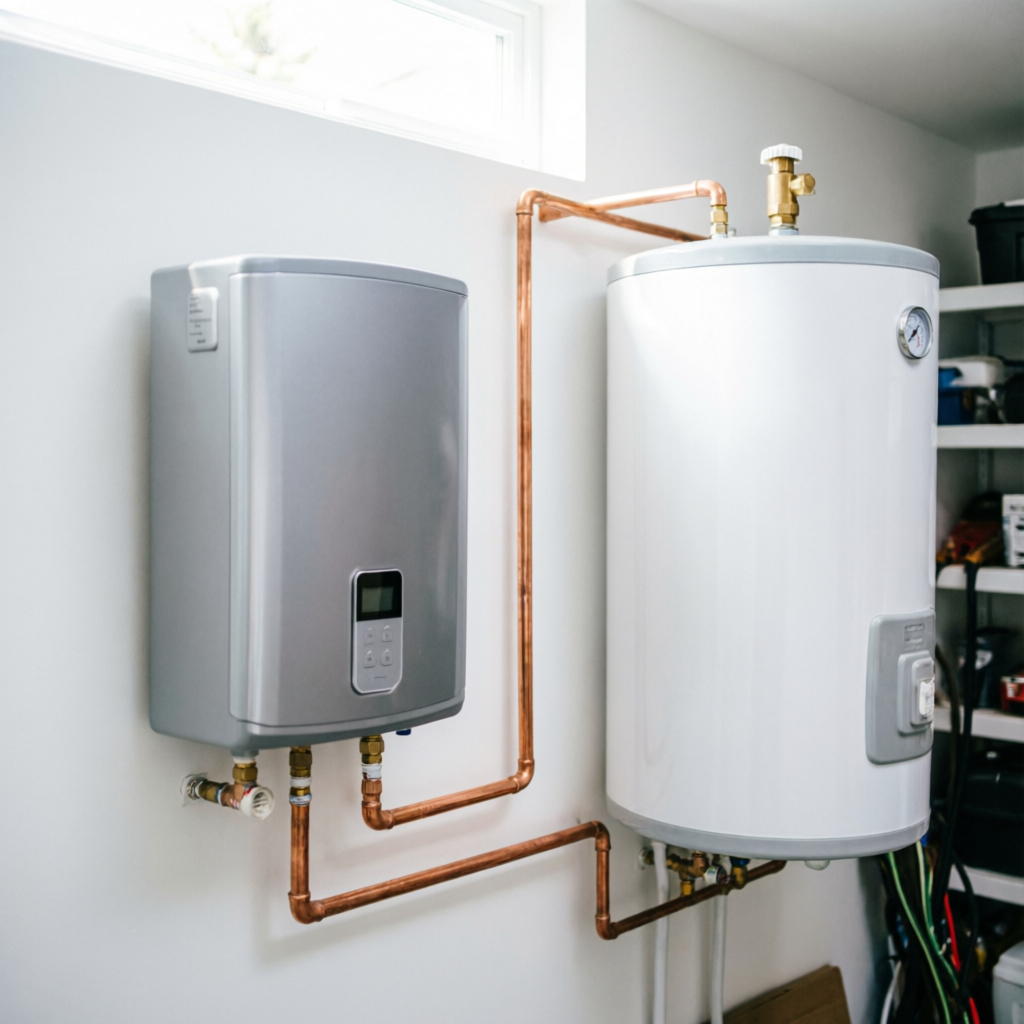
Tankless vs. Tank Water Heater: The California Homeowner's Guide
We've installed 1,400+ water heaters across LA and SD. Here's the honest breakdown including the hard-water penalty SD homeowners must factor in.
Salt-Air Corrosion: Protecting Coastal SD Plumbing
From La Jolla to Coronado, marine layer salt spray eats through exposed copper in 5–8 years. Here's how to spec marine-grade fittings.
Water Heater Problems Homeowners Should Never Ignore
Seven warning signs your water heater is about to fail — and the repair-vs-replace math that saves thousands.